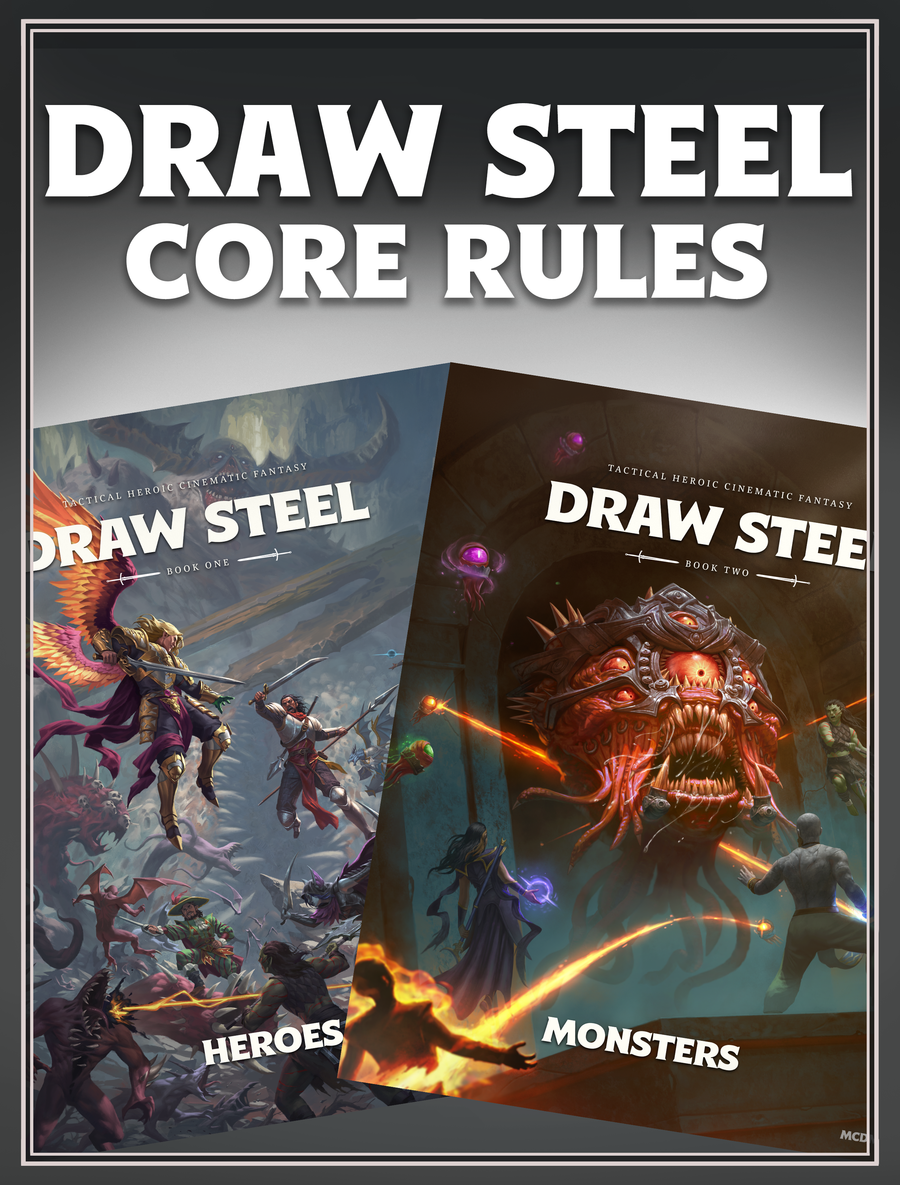
Draw Steel Beginner Guide
Learn how to play Draw Steel: resolve 2d10 Power Rolls, take a turn, use abilities and heroic resources, build a first hero, and prepare for the first session.
How does Draw Steel play?
The Director presents a situation, the players choose what their heroes do, and tests or abilities often use a 2d10 Power Roll with three result tiers. Combat emphasizes positioning, teamwork, and effects that move creatures or change the battlefield.
What can a hero do on a turn?
A normal turn is organized around a main action, a maneuver, and a move action. Abilities state which action type they use, while triggered actions happen when their printed trigger occurs.
What should I bring to a first session?
Bring a completed hero or pregen, the current character sheet, the official rules reference, dice, and a way to mark stamina, recoveries, surges, class resources, and conditions.
The Core Play Loop
The Director describes the scene and what is at stake. A player states the result they want, chooses an ability or a reasonable approach, and confirms the target, distance, and timing before rolling.
When a Power Roll is required, roll 2d10, add the relevant characteristic, apply edge or bane, and read the matching tier. Resolve the complete result in written order, including damage, potency, movement, conditions, and any legal resource spend.
- Understand the objective before choosing an action.
- Check target, distance, line of effect, and action type.
- Roll only after all modifiers are known.
- Resolve the tier from top to bottom.
- Mark resources and process triggers before play passes on.
Your First Turn
Start by reading the battlefield. Decide where the hero needs to stand, which ally can benefit from the action, and which enemy or objective creates the most pressure. You can split the turn's choices in the order that best supports the plan.
| Turn Choice | Typical Job | Check First |
|---|---|---|
| Main action | Use a major ability, attack, or other substantial action. | Targets, distance, Power Roll, and resource cost. |
| Maneuver | Set up the turn, interact, aid, escape, or use an option labeled Maneuver. | Whether the option is free and whether its requirements are met. |
| Move action | Advance, shift, disengage, or use another movement option. | Speed, terrain, reach, and conditions affecting movement. |
| Triggered action | Respond when a printed trigger occurs, often outside the hero's turn. | Exact trigger, legal target, and whether the action is available this round. |
First-Session Checklist
A new player does not need to memorize every rule. Learn one reliable main action, one positioning option, the class resource, the hero's triggered action, and how recoveries and surges appear on the sheet.
- Finish every required choice in the character builder.
- Copy stamina, recoveries, speed, stability, surges, and class resources to the sheet.
- Mark the action type and target line on the abilities you expect to use first.
- Keep Power Rolls, actions, movement, conditions, and saving throws within reach.
- Agree how the group will track the shared hero-token pool.
Continue Learning
Use the shortest guide that answers the next decision, then return to play.
Character Builder
Create a hero with guided validation and level-based choices.
Power Roll
Learn the three-tier 2d10 resolution used by tests and abilities.
Actions and Maneuvers
Understand the choices available on and outside a turn.
Official Resources
Open current sheets, pregens, and table references from MCDM.
Verified Sources
Open the source that matches the topic, then check its publication or update date before resolving a rule at the table.